SEMQ / SDK DOCUMENTATION
Inspect changes between embedding rebuilds.
Encode unit-norm float32 vectors as deterministic symbolic rows. Save a .semq state, compare versions by id, and gate changes against variation measured in your pipeline. A hash of the floats says whether the bytes changed; SEMQ says whether the state did, and where.
C core Python · Rust · Go · TypeScript/WASM Cross-platform bytes
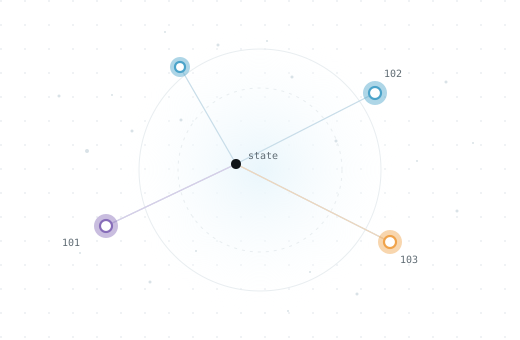
INTERACTIVE EXAMPLE / 01
Same corpus. What moved?
Switch the candidate to see how a state diff separates unchanged rows, changed symbols, and new ids.
55d5acf0caf9…b6 0d=b2 0d=96 0d=55d5acf0caf9…b6 0d=b2 0d=96 0d=0 changed · 0 added · 0 removed. The state ids match.
A fixed walkthrough of actual quant(dim=4, bins=4) output. The controls select precomputed results; encoding runs in the SDK, not in this page. Run the same example yourself.
WORKFLOW / 02
From vectors to a verdict.
Encode a state
Give SEMQ unit-norm float32 vectors, stable ids, a codec rule, and a manifest. Save the result as .semq.
Measure normal variation
Compare rebuilds that changed nothing on purpose. A Floor captures the variation you actually observed.
Gate the candidate
Diff by id to find changed symbolic rows. Use within for the gate and inspect the changes when it fails.
DOCUMENTATION MAP / 03